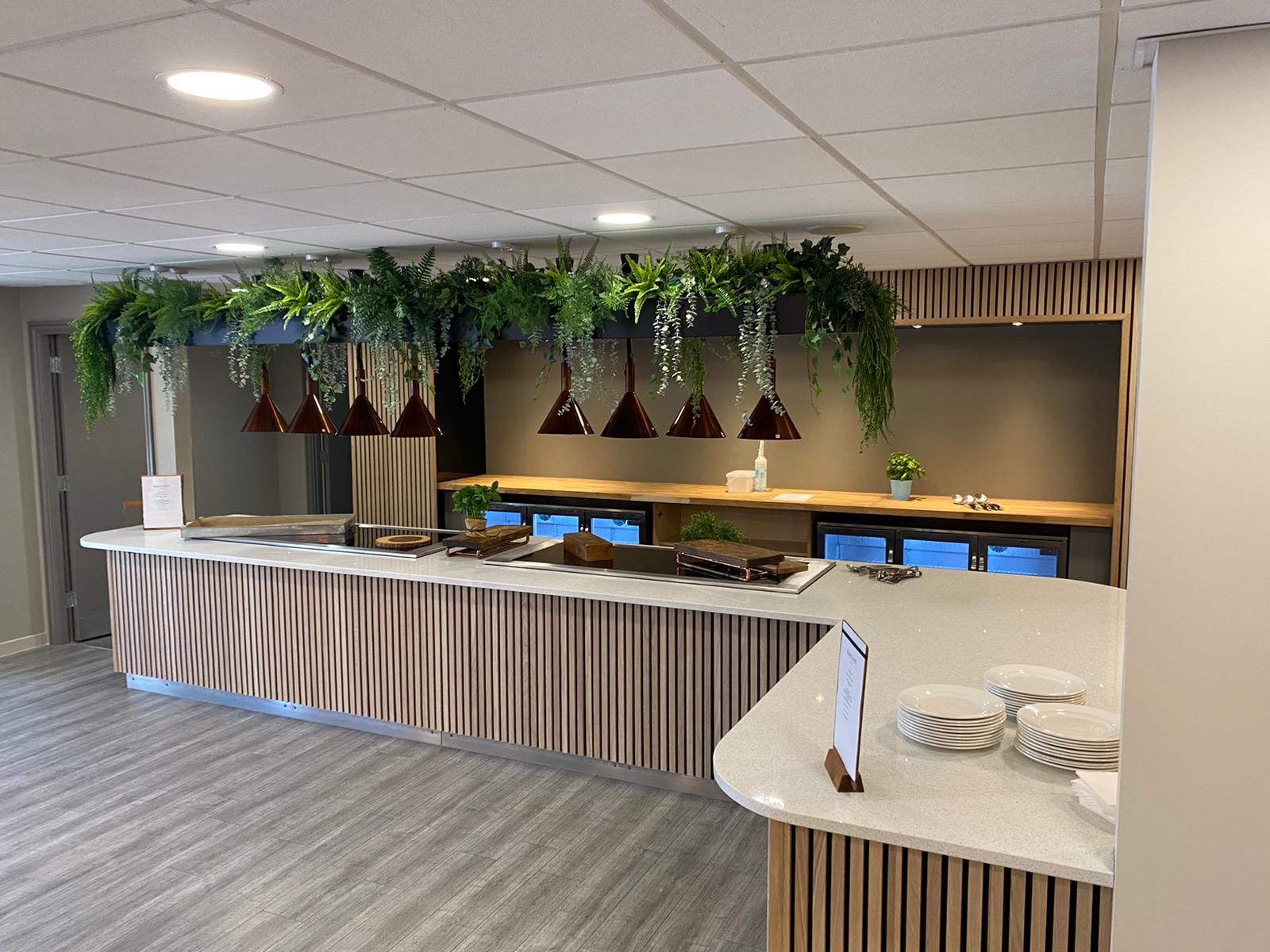
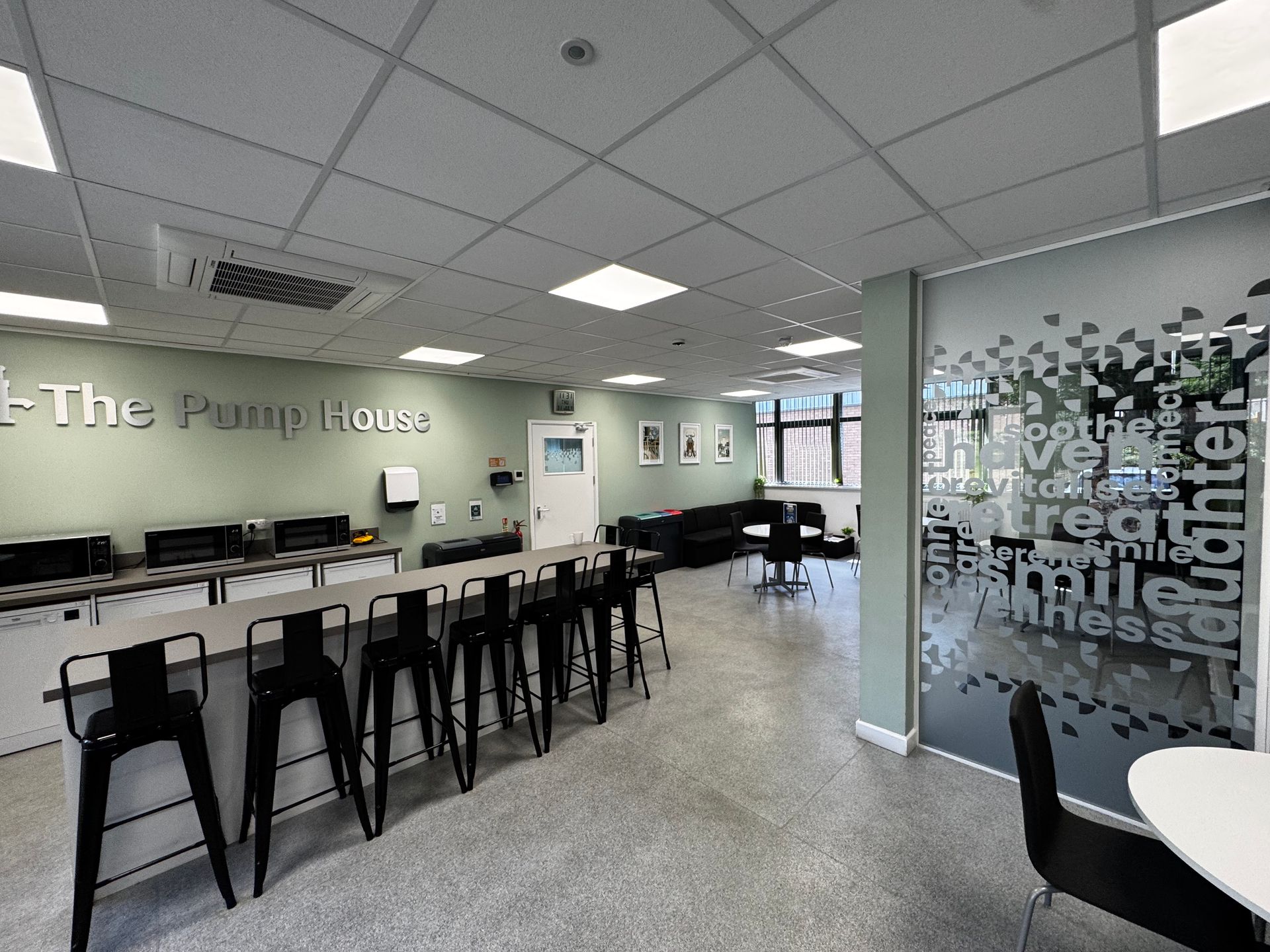
Why Circular Commercial Fit Out Will Change the Way You Refurbish Offices
The traditional approach to office refurbishment follows a predictable pattern. Strip everything out. Bin it. Start from scratch. It's wasteful, expensive, and increasingly at odds with how forward-thinking businesses operate.
Circular commercial fit out offers a different model: one that keeps materials and assets in use for longer, reduces environmental impact, and delivers significant cost savings. We've been working in this space for over 20 years, and the shift we're seeing toward circular principles is fundamentally changing how Facilities Managers and Property Managers approach
interior fit out projects.
The Financial and Environmental Case
The numbers speak clearly. Recent projects have demonstrated cost reductions of up to 51% by integrating circular principles into commercial fit out work. Instead of discarding raised access floors, ceilings, furniture, lighting, and partitioning, these elements are assessed, refurbished, and reused where appropriate.
This isn't about cutting corners. It's about recognising that many existing office components have considerable lifespan remaining. Quality materials don't stop being valuable simply because a lease is changing or a brand refresh is needed.
The environmental benefits align with the financial ones. Every tonne of material that stays in use represents avoided embodied carbon from manufacturing and transportation. For organisations tracking Scope 3 emissions, the impact of refurbishment choices can be substantial.
We've delivered projects across Birmingham, Manchester, and Telford where the circular approach has reduced waste by 60-70% compared to traditional strip-outs. That's not just better for reporting: it's tangible progress.
Core Principles of Circular Design
Circular office refurbishment operates on three interconnected principles.
Design for longevity. This means selecting durable, adaptable materials that won't need replacing in three years. Modular systems that can be reconfigured. Finishes that age well rather than date quickly.
Reuse existing materials. A proper material audit identifies what can stay, what can be refurbished, and what genuinely needs replacing. Ceiling tiles, partition systems, even carpet tiles: all can be cleaned, repaired, or repurposed rather than discarded.
Track materials digitally. Knowing what you have, where it is, and its condition allows better decision-making across multi-site portfolios. This becomes particularly valuable for organisations managing ongoing rollouts.
These principles shift the mindset from viewing fit out as a one-time event to understanding it as part of a longer material lifecycle.
Operational Advantages
Beyond sustainability credentials, circular approaches deliver practical benefits that Facilities Managers appreciate immediately.
Faster project delivery. Less demolition and reconstruction means shorter timescales. When you're retaining ceiling grids, raised floors, and core partitioning, you're eliminating weeks of work. That translates to reduced business disruption and earlier occupation.
Reduced procurement complexity. Managing fewer new material orders simplifies logistics, reduces lead time risks, and decreases site coordination demands. With supply chains still experiencing variability, this reliability matters.
Improved snag-free handovers. Our 99% snag-free project rate stems partly from working with proven, installed materials rather than coordinating entirely new systems. There are fewer unknowns, fewer interfaces, and fewer opportunities for defects to emerge.
For Property Managers overseeing multiple locations, these operational benefits compound. A standardised approach to material assessment and reuse creates consistency across sites while allowing flexibility for local requirements.
Creating Healthier Workspaces
The focus on circular principles naturally leads to better working environments.
New materials often mean new volatile organic compounds (VOCs) off-gassing into spaces. Refurbished furniture and reconditioned fixtures have typically completed this process, resulting in better air quality from day one.
Circular fit outs also tend toward flexible, adaptable layouts. When you're designing for future reconfiguration rather than one fixed arrangement, you create spaces that can evolve with changing team structures and work patterns. Modular systems support ergonomic adjustments and allow zones to be repurposed without full refits.
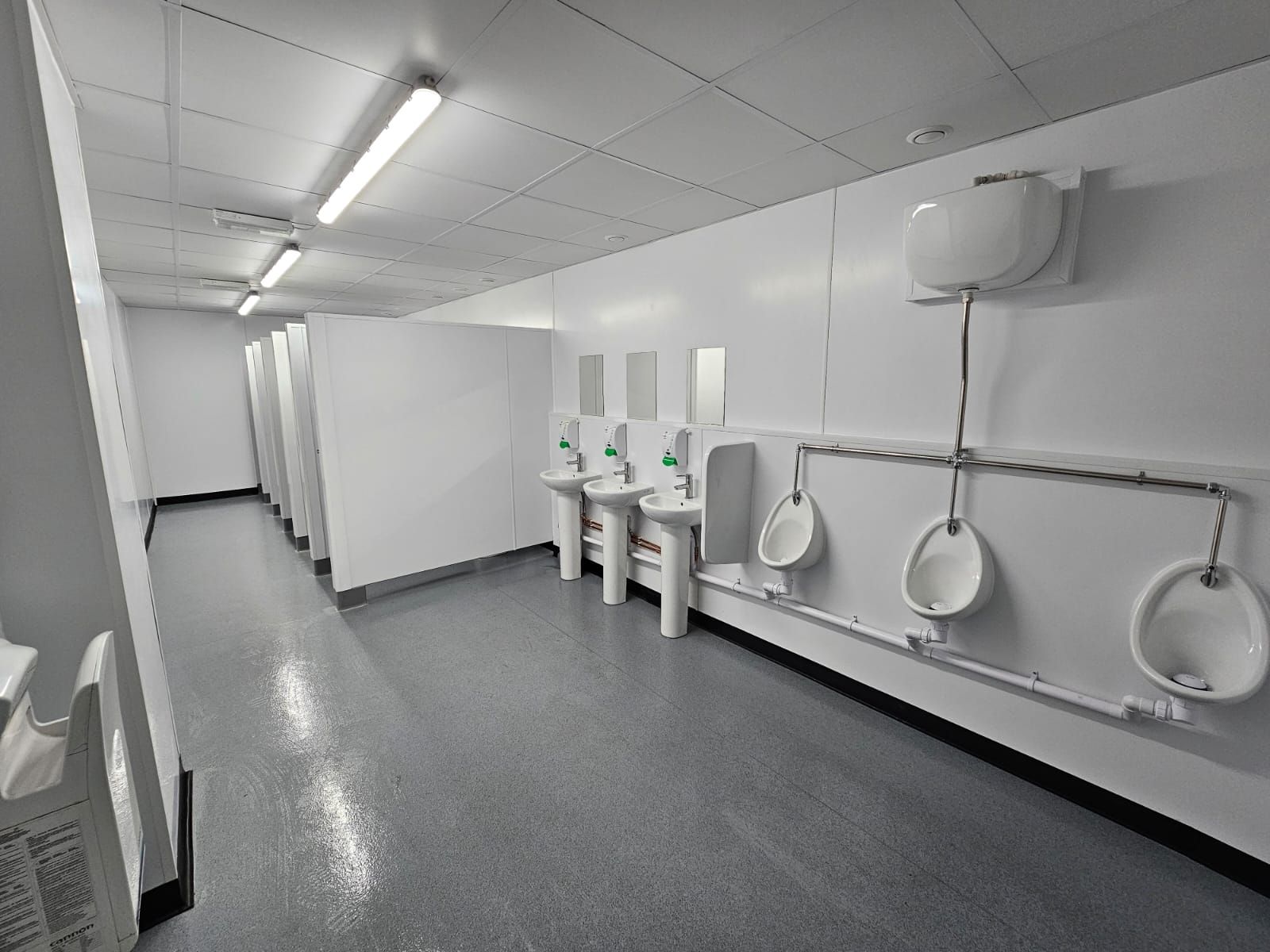
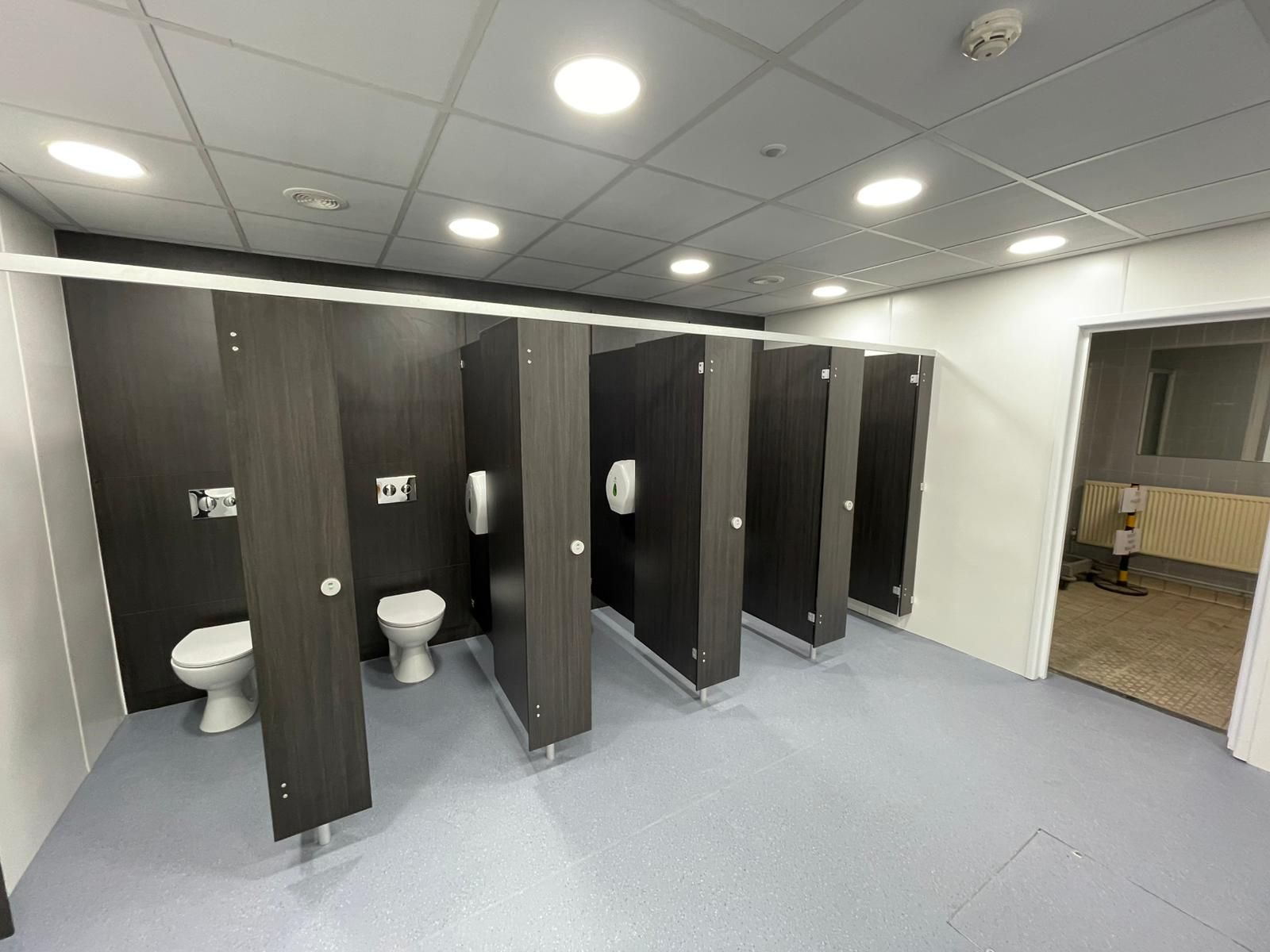
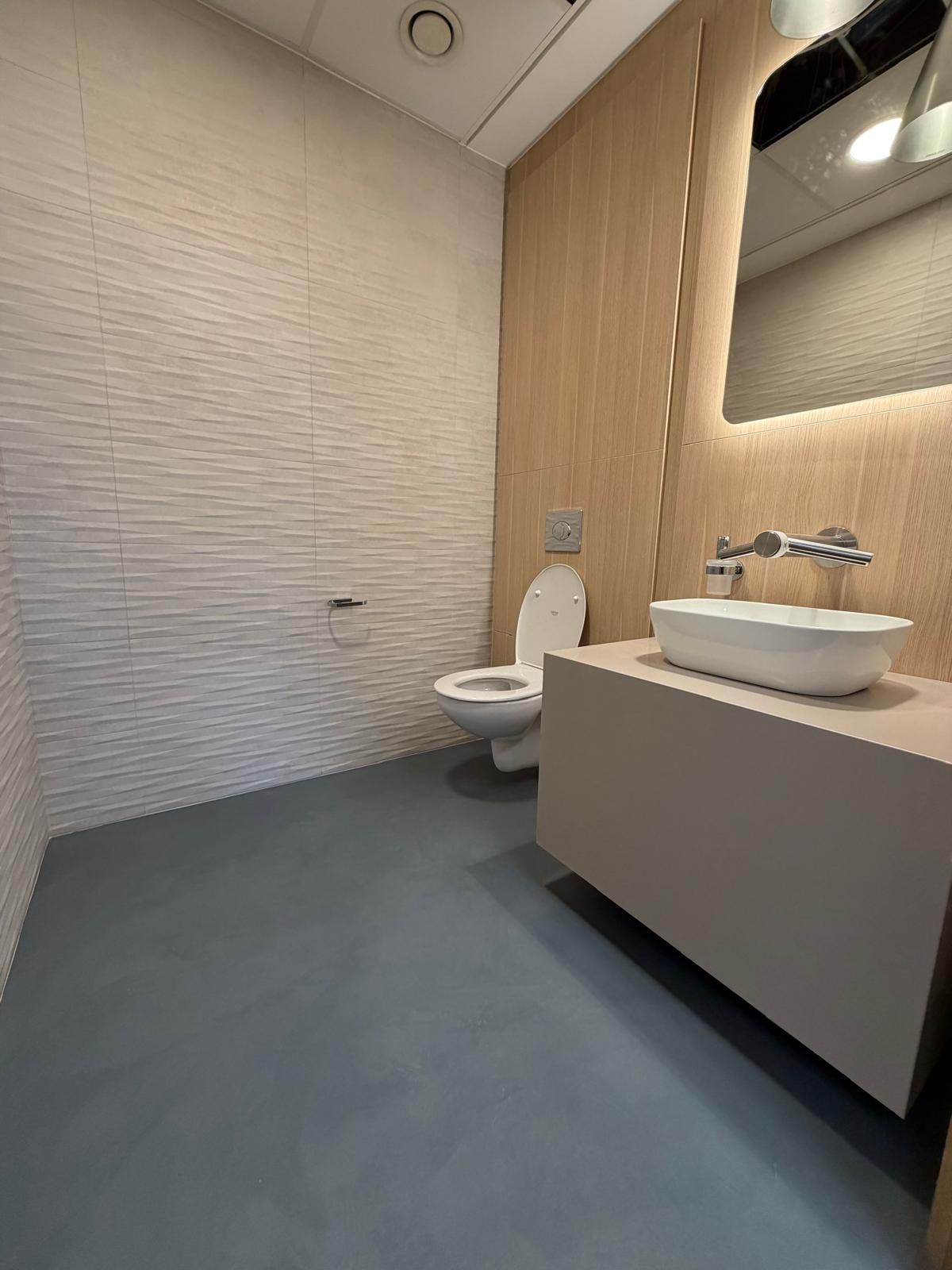
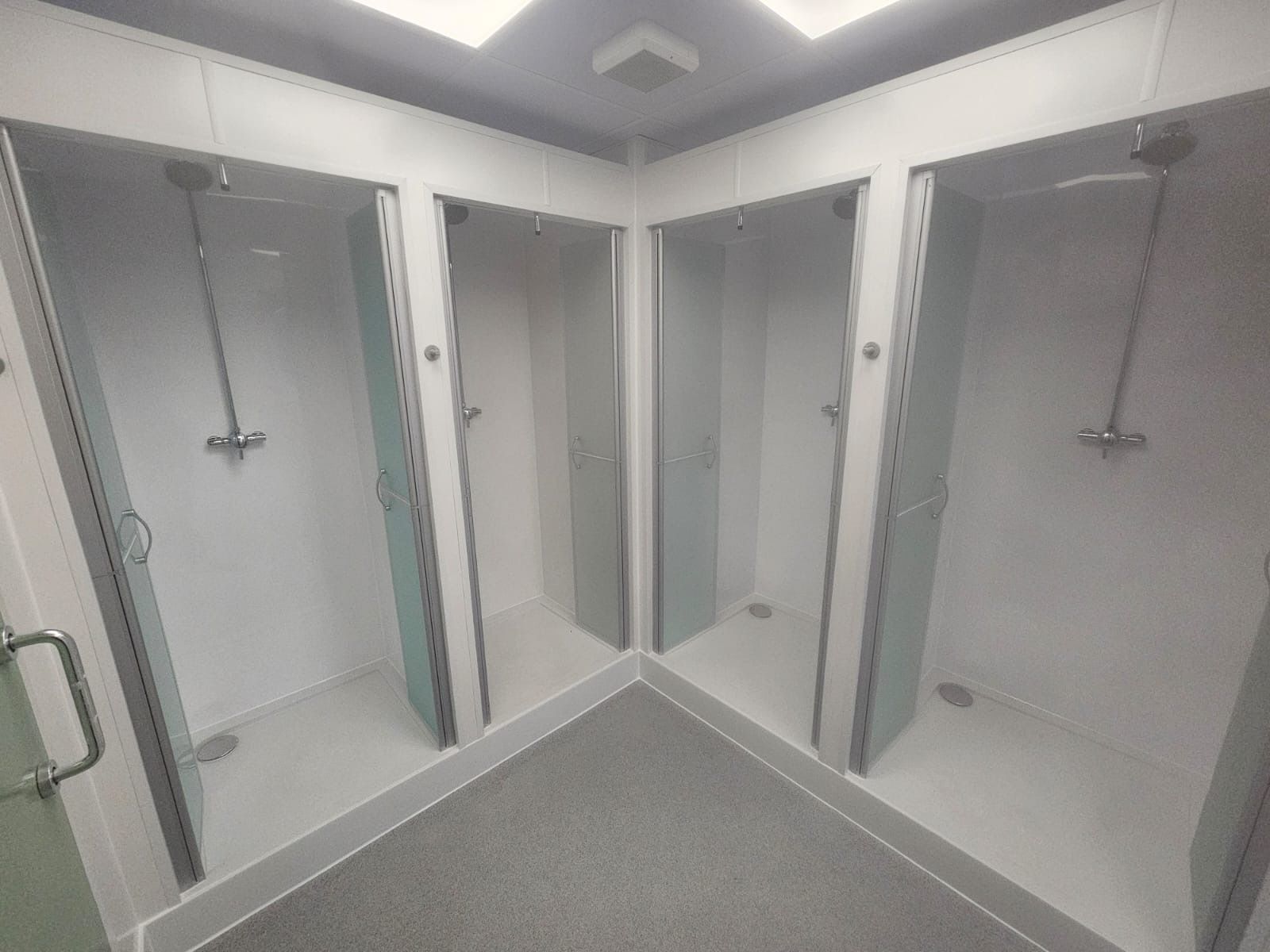
We've seen this particularly in washroom refurbishment projects, where quality fixtures can be retained and supplemented with updated finishes, delivering refreshed facilities without the waste and cost of complete replacement.
Planning Considerations
Circular commercial fit out does require different planning. Material audits typically add 6-8 weeks to the pre-construction phase. This involves:
- Surveying existing assets and assessing condition
- Identifying reuse opportunities and refurbishment requirements
- Sourcing any reclaimed materials to supplement retained items
- Designing with flexibility to accommodate available stock
This upfront investment pays dividends during delivery, but it does demand earlier engagement and more collaborative planning between designers, contractors, and clients.
The design process also requires flexibility. When you're incorporating existing materials, you adapt the scheme to what's available rather than specifying everything from scratch. Some Facilities Managers find this uncomfortable initially: it feels less controlled. In practice, it often leads to more creative solutions.
How We Approach Circular Office Refurbishment
Our process starts with understanding what you already have. Before any design work begins, we conduct thorough site assessments to identify reuse opportunities. This includes testing and documenting condition, not just making assumptions based on age.
For multi-site projects, we develop standardised assessment frameworks that allow consistent decision-making across locations while accounting for site-specific conditions. A partition system that's reached end-of-life in one building might have years remaining in another.
We maintain relationships with specialist refurbishment suppliers and track reclaimed material sources. This means we can supplement retained elements with reclaimed items rather than defaulting to new purchases. It requires more coordination, but it's where significant cost and carbon savings emerge.
Our in-house project management team coordinates the logistics of retaining, removing, refurbishing, and reinstalling materials. This integrated approach: combining design, project management, and delivery: allows us to manage the additional complexity that circular principles introduce without extending timescales or compromising quality.
The Broader Shift
Circular commercial fit out represents more than a sustainability initiative. It signals a fundamental shift in how organisations view their physical assets.
Buildings and fit-outs are no longer disposable backdrops to business activity. They're investments that should deliver value over extended periods, adapt to changing needs, and minimise negative impacts.
For Facilities Managers, this creates both opportunity and responsibility. The decisions made during office refurbishment projects now carry longer-term implications. Specifying adaptable systems, documenting asset conditions, planning for future reconfigurations: these considerations are becoming standard rather than optional.
Property Managers benefit from portfolio-wide thinking. Materials recovered from one decommissioned space can find new purpose in another location. Knowledge gained from one project informs better decisions on the next. The circular approach scales effectively across multi-site operations.
Moving Forward
The transition to circular principles in commercial fit out is well underway. Regulatory pressures, client expectations, and economic realities are all pushing in the same direction.
We've been delivering projects across the Midlands and Northwest for two decades, and the conversation has shifted markedly. Five years ago, circular approaches were niche. Today, they're increasingly the baseline expectation.
For organisations planning office refurbishment work, the question is no longer whether to consider circular principles, but how to implement them effectively. That requires experienced partners who understand both the sustainability theory and the practical delivery challenges.
The spaces we create today should serve their occupants well, cost less to deliver and operate, and leave a lighter footprint. Circular commercial fit out provides a framework for achieving all three.
If you're planning refurbishment work and want to explore how circular principles could apply to your project,
get in touch. We'll start with what you already have and build from there.