When your office needs work, the terminology can get confusing fast.
Fit out. Refurbishment. Renovation. Refit.
They're often used interchangeably, but they're not the same thing. And choosing the wrong approach can cost you time, money, and a workspace that doesn't actually serve your business.
Over our 20 years working across Manchester, Birmingham, Telford, and beyond, we've helped businesses make this decision hundreds of times.
The answer isn't always obvious, but it always comes down to three things: your starting point, your goals, and your constraints.
Let's break it down.
What Is an Office Fit Out?
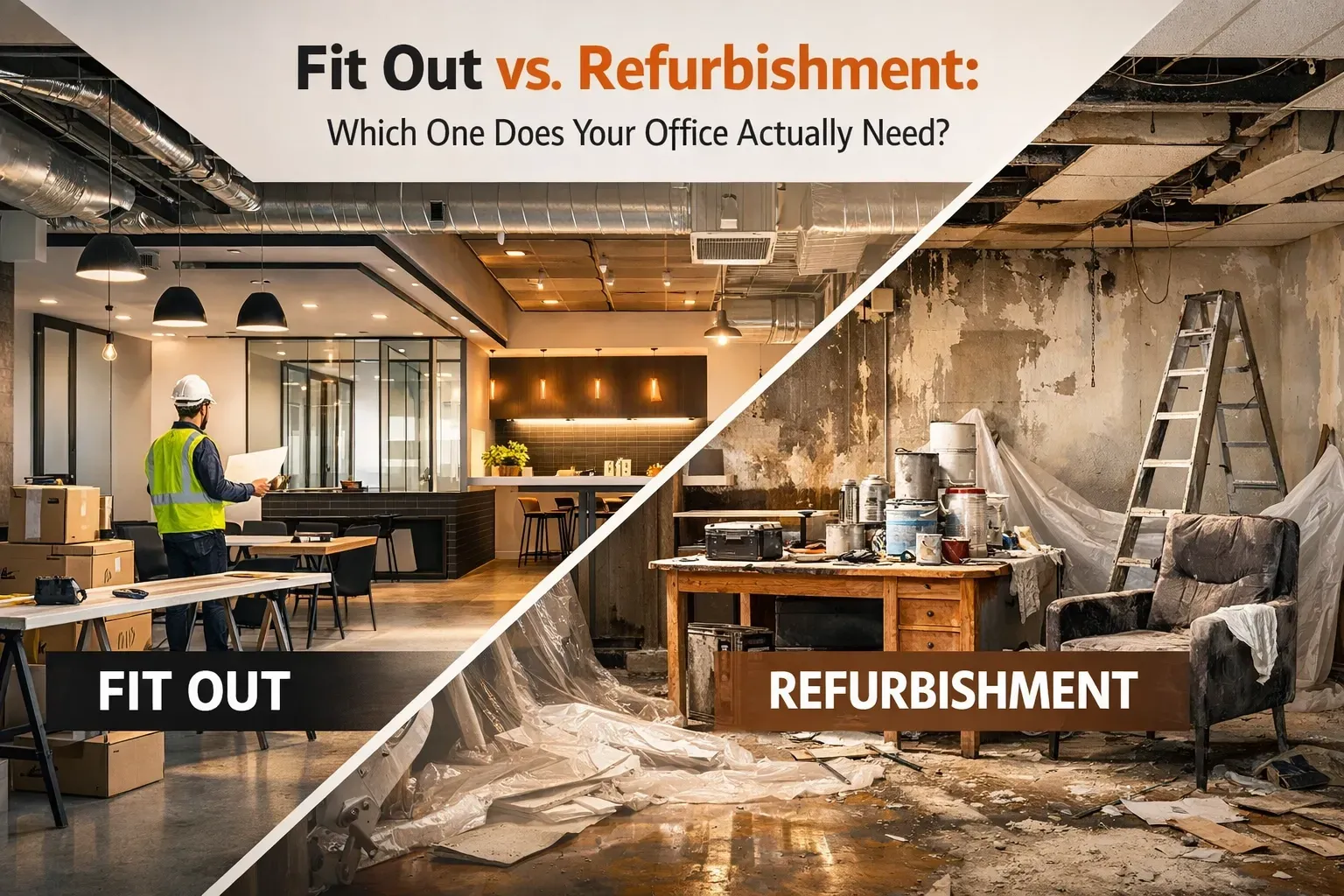
A fit out is what happens when you take an empty or shell space and turn it into a functioning office.
Think new build. Think blank canvas. Think bare walls, concrete floors, and exposed ceilings.
The work typically includes:
- Designing layouts based on headcount and departmental needs
- Installing partitions, walls, and structural elements
- Creating meeting rooms, breakout areas, and collaboration spaces
- Integrating electrical, data, and AV systems
- Adding flooring, ceilings, lighting, and HVAC
- Applying finishes that reflect your brand identity
- Installing furniture and equipment
There are two main types. A
Category A fit out prepares the space to a base standard: raised floors, suspended ceilings, basic lighting, and mechanical systems.
A
Category B fit out is the full transformation: branded, functional, and ready for your team to move in.
Fit outs offer maximum customisation. You're not working around existing structures or layouts. You're building exactly what your business needs.
But they're also more time-intensive and costly. You're starting from scratch, which means more design work, more construction, and often more complexity.
What Is an Office Refurbishment?
A refurbishment is about breathing new life into an existing office.
You're not starting from zero. You're working with what's already there: walls, floors, ceilings, services: and improving it.
Refurbishment work typically includes:
- Replacing or upgrading flooring, lighting, and ceiling tiles
- Redecorating walls with fresh paint or finishes
- Reworking layouts to improve flow and functionality
- Upgrading furniture and fixtures
- Improving building systems like heating, ventilation, and air conditioning
- Enhancing energy efficiency
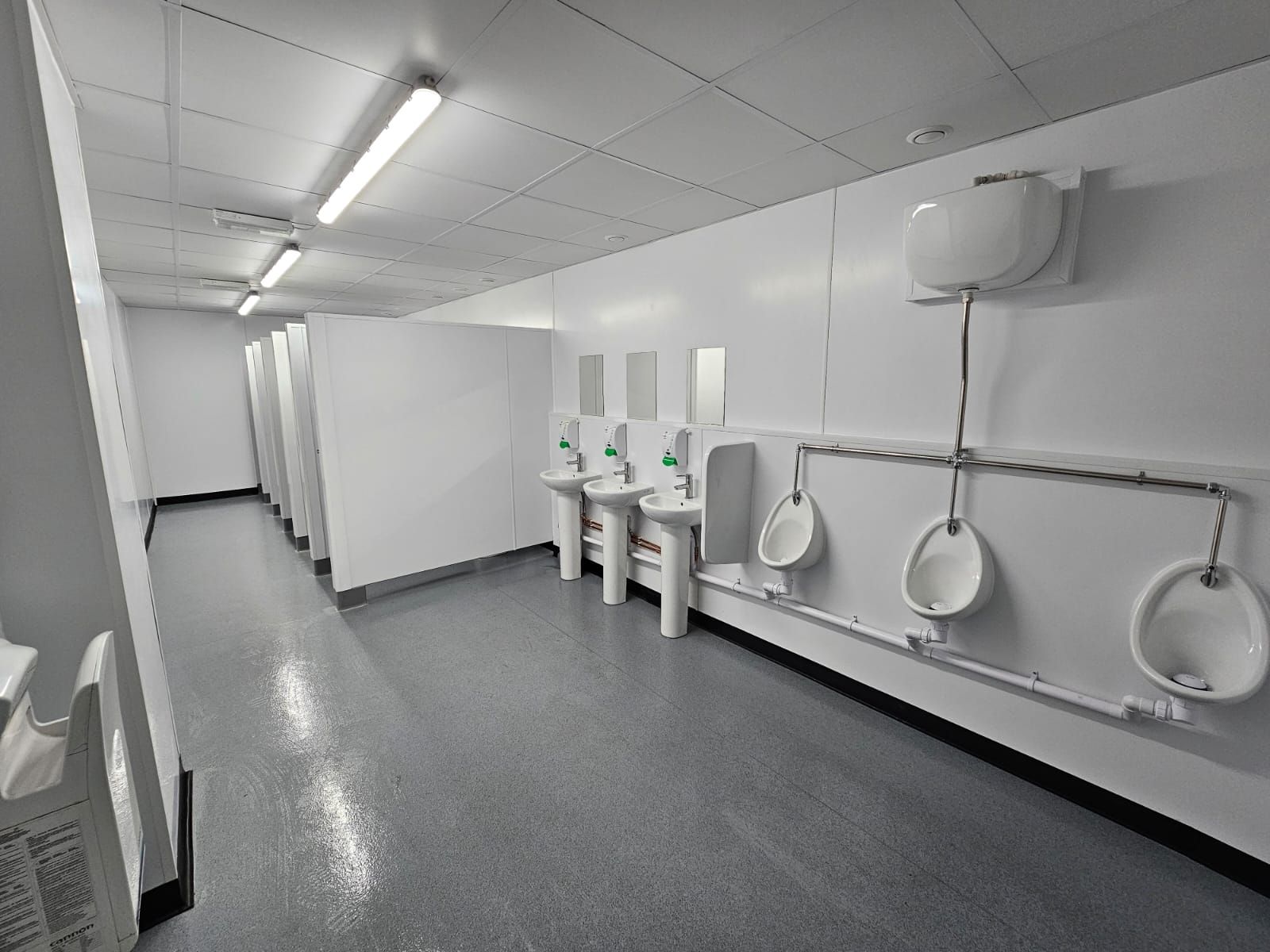
- Modernising washrooms and communal areas
Refurbishments are faster and more budget-friendly. You're building on existing infrastructure, which means less disruption and quicker turnaround.
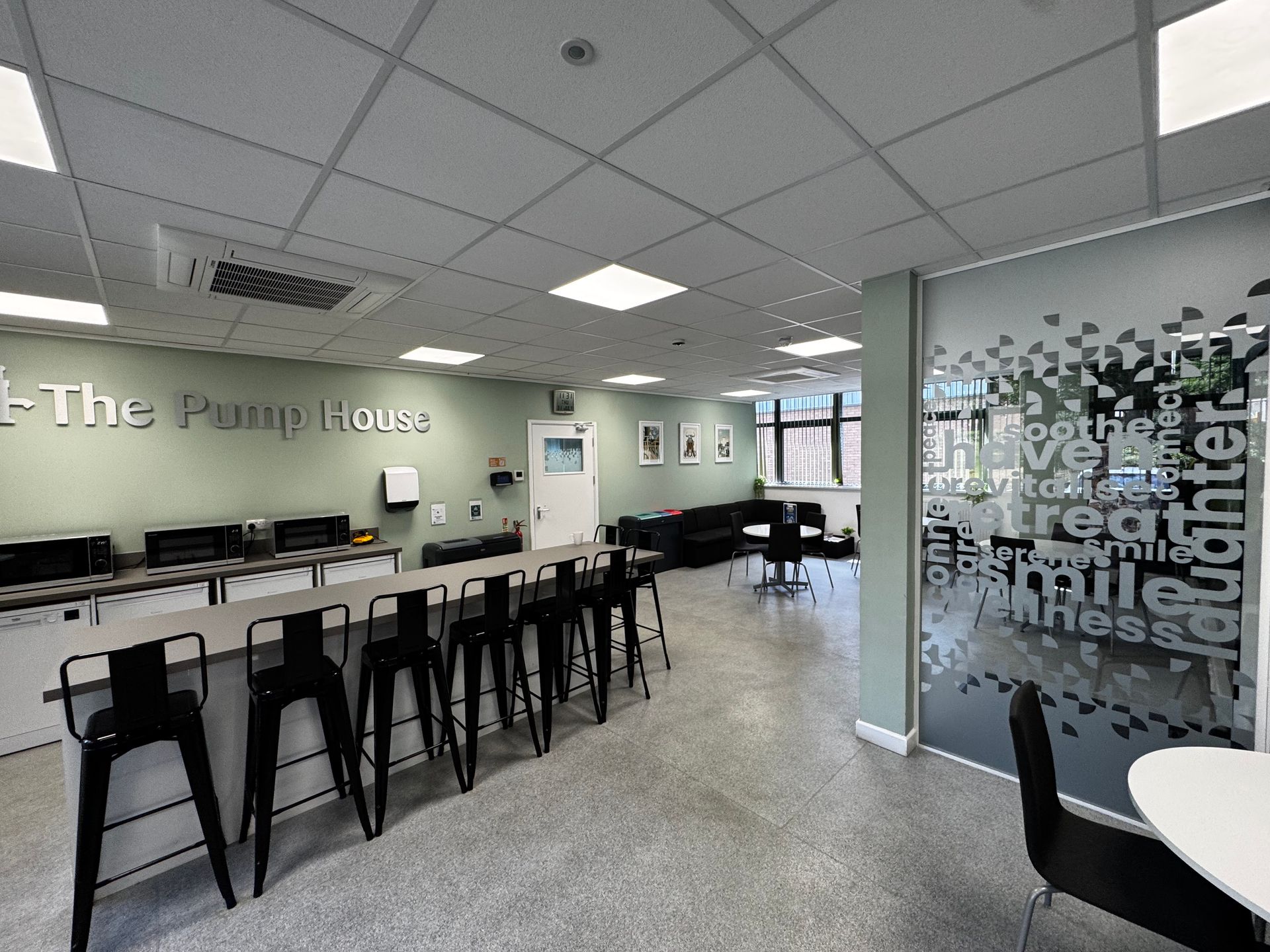
They're ideal when your space is fundamentally sound but outdated, inefficient, or no longer fit for purpose. Perhaps your layout doesn't support hybrid working. Perhaps your breakout areas are tired. Perhaps your washrooms need a serious upgrade.
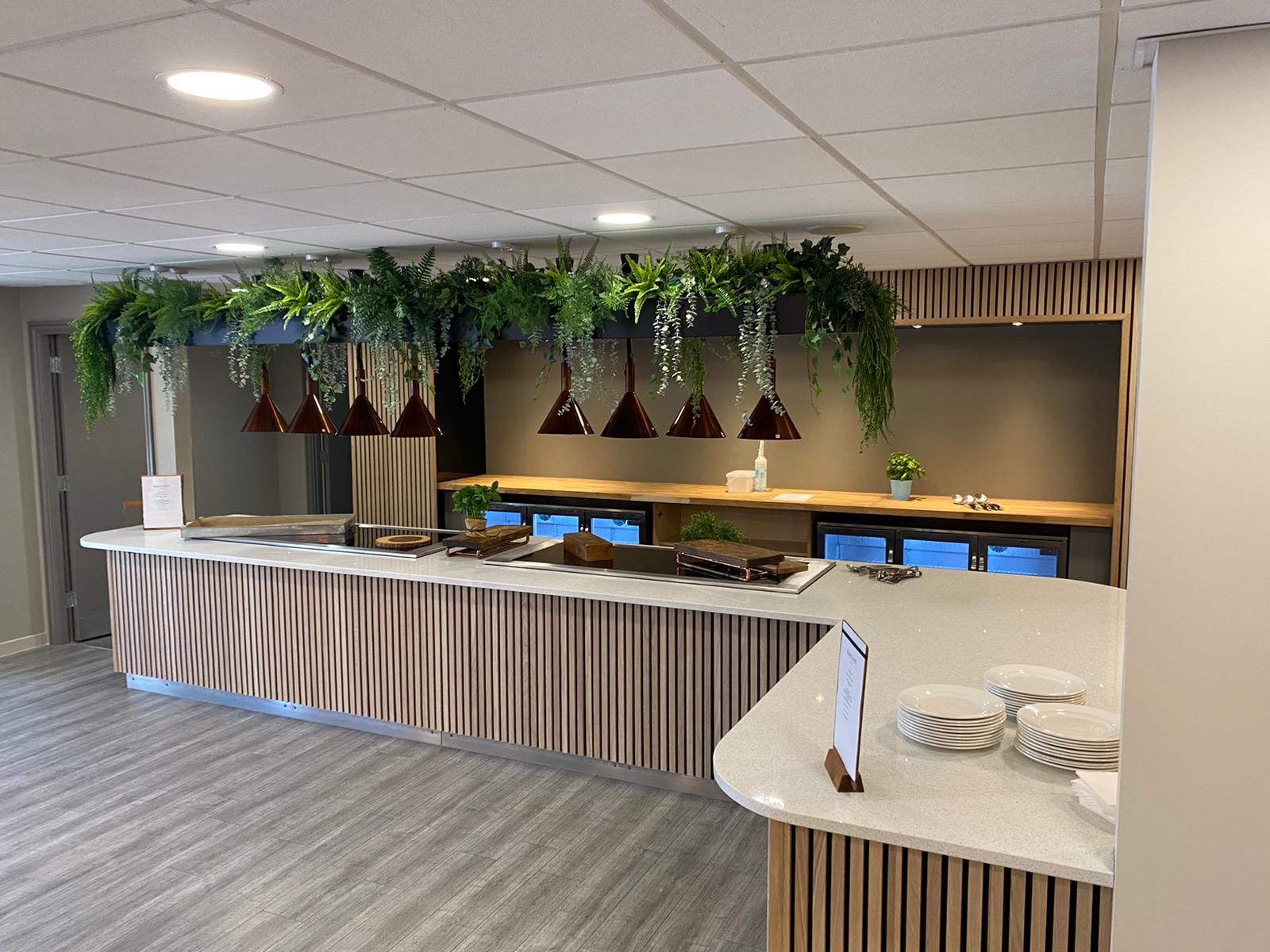
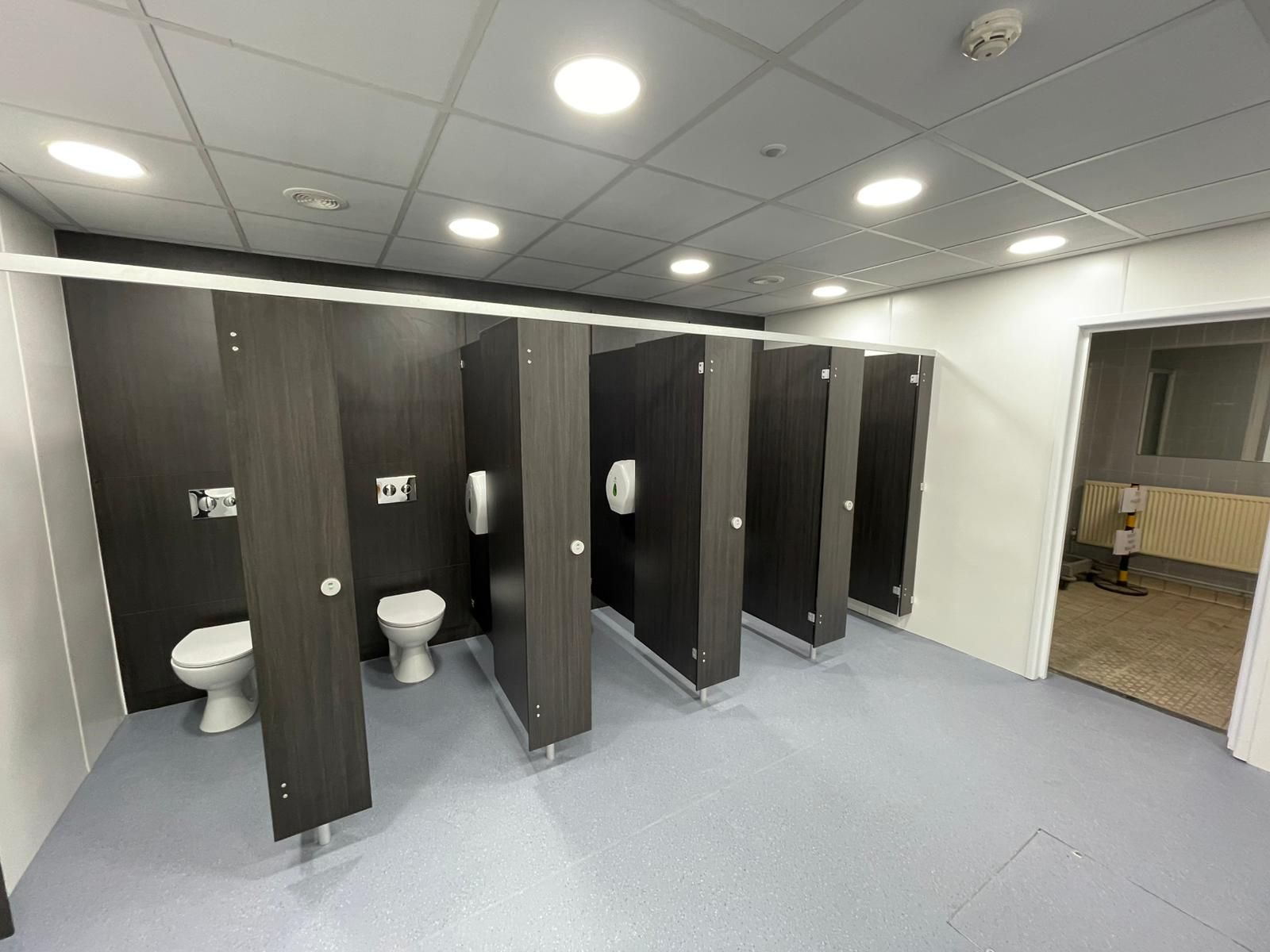
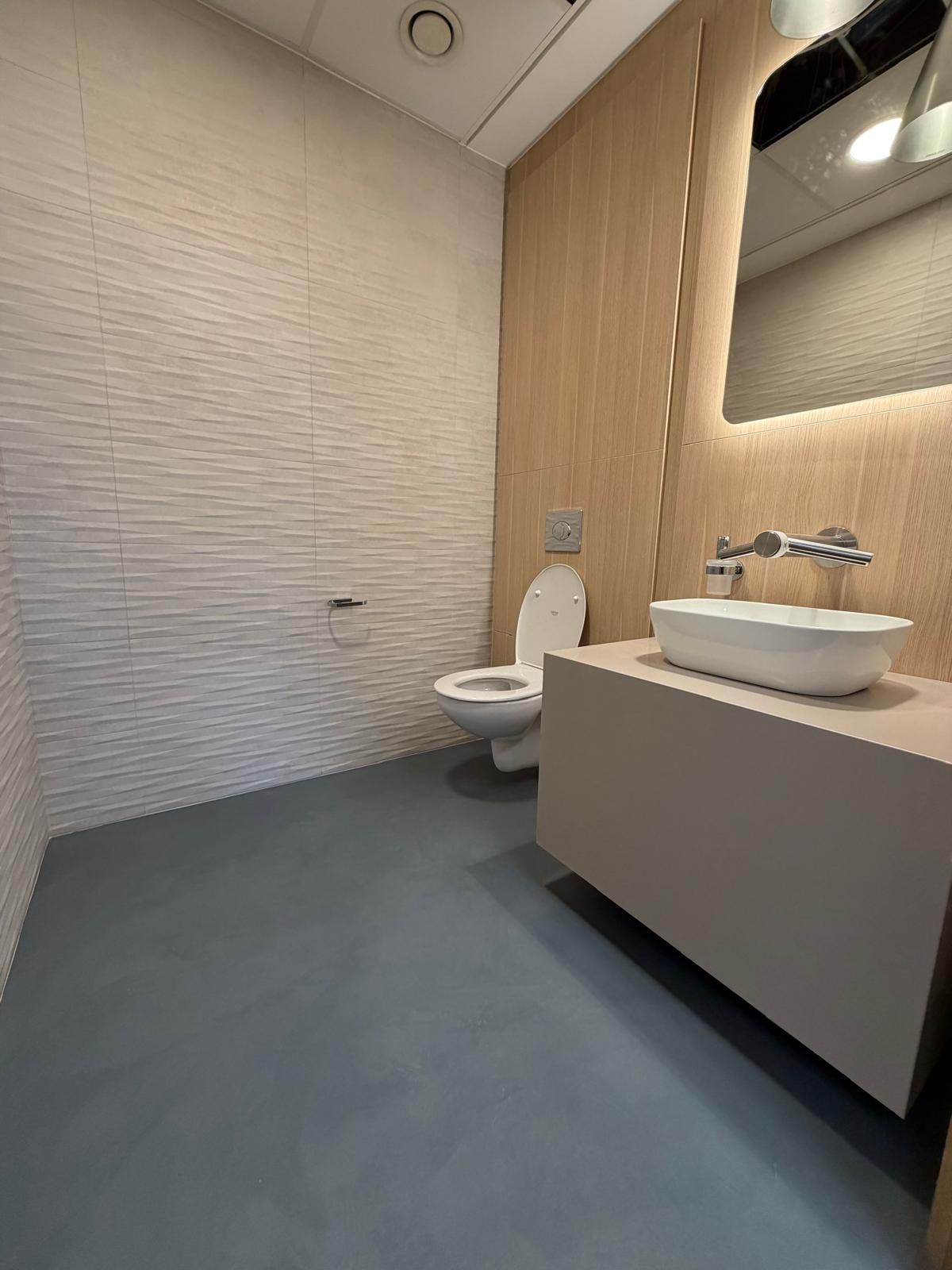
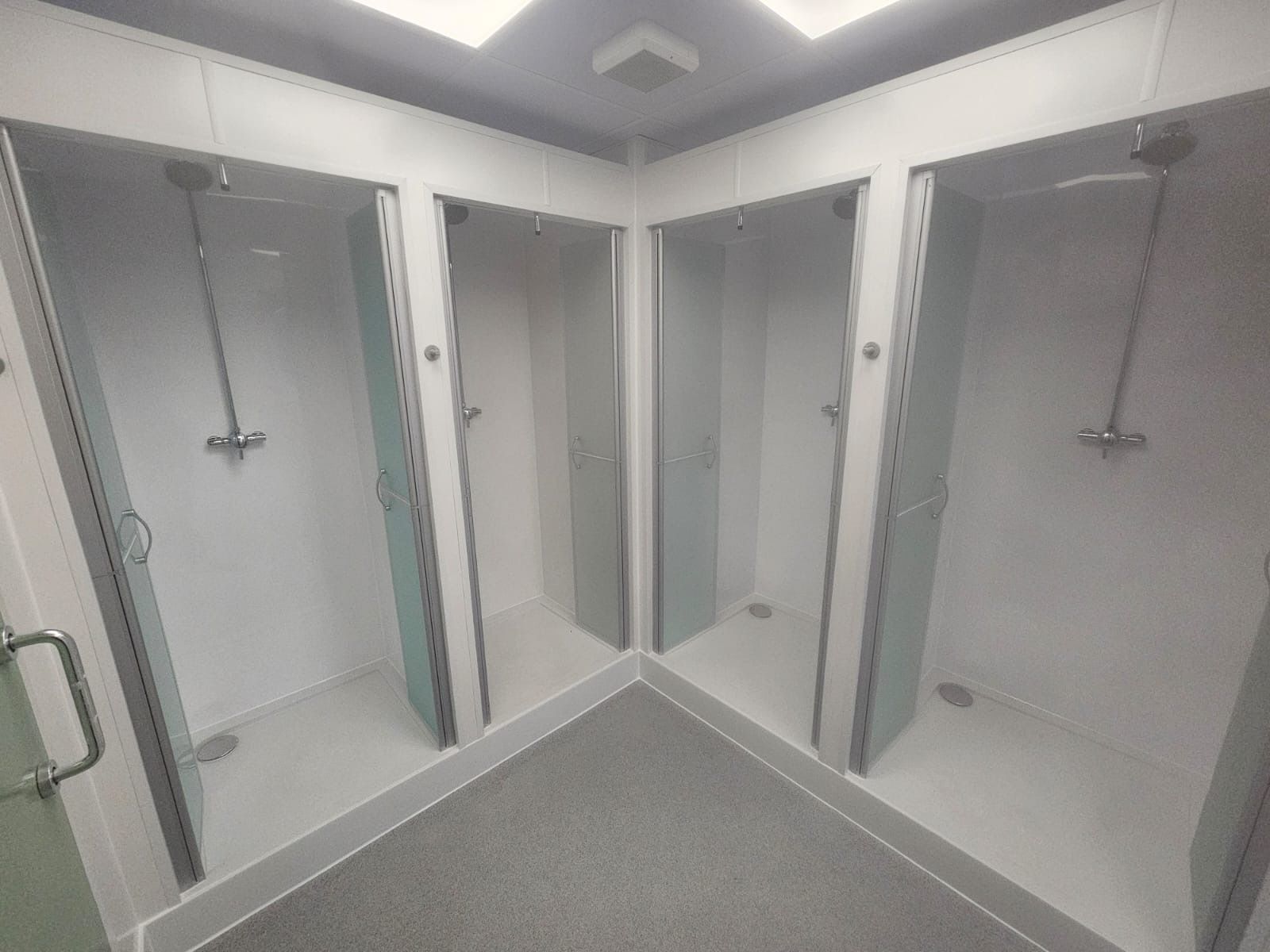
We've delivered washroom refurbishments that completely transform how staff experience the workplace: without touching the rest of the office.
The Key Differences
The distinction comes down to scope, starting point, and outcome.
Starting point: A fit out begins with an empty or shell space. A refurbishment begins with an existing, occupied office.
Scope of work: Fit outs involve comprehensive design and construction, often including structural changes and full mechanical and electrical installation. Refurbishments focus on updating and improving what's already in place.
Customisation: Fit outs offer complete freedom to design a space around your brand and operations. Refurbishments work within the constraints of existing layouts and infrastructure.
Cost and time: Fit outs are more expensive and take longer due to the volume of work. Refurbishments are quicker and more cost-effective because they leverage existing elements.
Disruption: Fit outs happen in vacant spaces, so there's no operational disruption. Refurbishments often need to be phased or scheduled around working hours to minimise impact.
How to Decide Which You Need
Start with these questions.
What's your current situation?
If you're moving into a new building, expanding into an additional floor, or relocating to a shell space, you need a fit out. If you're staying put but your office feels dated or no longer works for your team, refurbishment is the answer.
What's your budget?
Fit outs require significant capital investment. Refurbishments can deliver major improvements at a fraction of the cost. Be realistic about what you can allocate: and what return you expect.
What's your timeline?
If you need to be operational quickly, refurbishment is faster. Fit outs take longer due to the design, procurement, and construction process. Factor in lead times for materials and any consents or approvals.
What's your end goal?
Do you need a fully branded, bespoke workspace that reflects your company culture? That's a fit out. Do you need to modernise, improve efficiency, or create better collaboration spaces within your current footprint? That's refurbishment.
What's the condition of your current space?
If your office has structural issues, outdated services, or poor layouts that can't be fixed with cosmetic work, a fit out might be the smarter long-term investment. If the bones are good but the finishes and functionality need updating, refurbishment will do the job.
Why Experience Matters
Whether you're fitting out or refurbishing, the success of the project hinges on execution.
We've been delivering interior fit outs and refurbishments for two decades. That means we've worked through supply chain disruptions, tight deadlines, occupied offices, listed buildings, and every challenge in between.
Experience means we can spot problems before they happen. It means we know which materials perform best in high-traffic areas. It means we understand how to phase work to keep your business running. And it means we deliver snag-free handovers because we've refined every stage of the process.
We work across Manchester, Birmingham, and Telford, with case studies that span corporate offices, hospitality spaces, and staff welfare facilities. Every project is different, but the fundamentals stay the same: focus, consistency, and delivery.
Getting It Right
The decision between fit out and refurbishment isn't always straightforward.
Sometimes a refurbishment uncovers issues that require more extensive work. Sometimes what looks like a full fit out can be simplified with smart design and phasing.
That's where an experienced team makes the difference. We assess your space, understand your goals, and recommend the approach that delivers the best outcome for your budget and timeline.
If you're trying to decide what your office actually needs, get in touch. We'll talk through your options, walk the space, and give you a clear recommendation based on 20 years of doing this work.
No jargon. No overselling. Just honest advice and expert delivery.