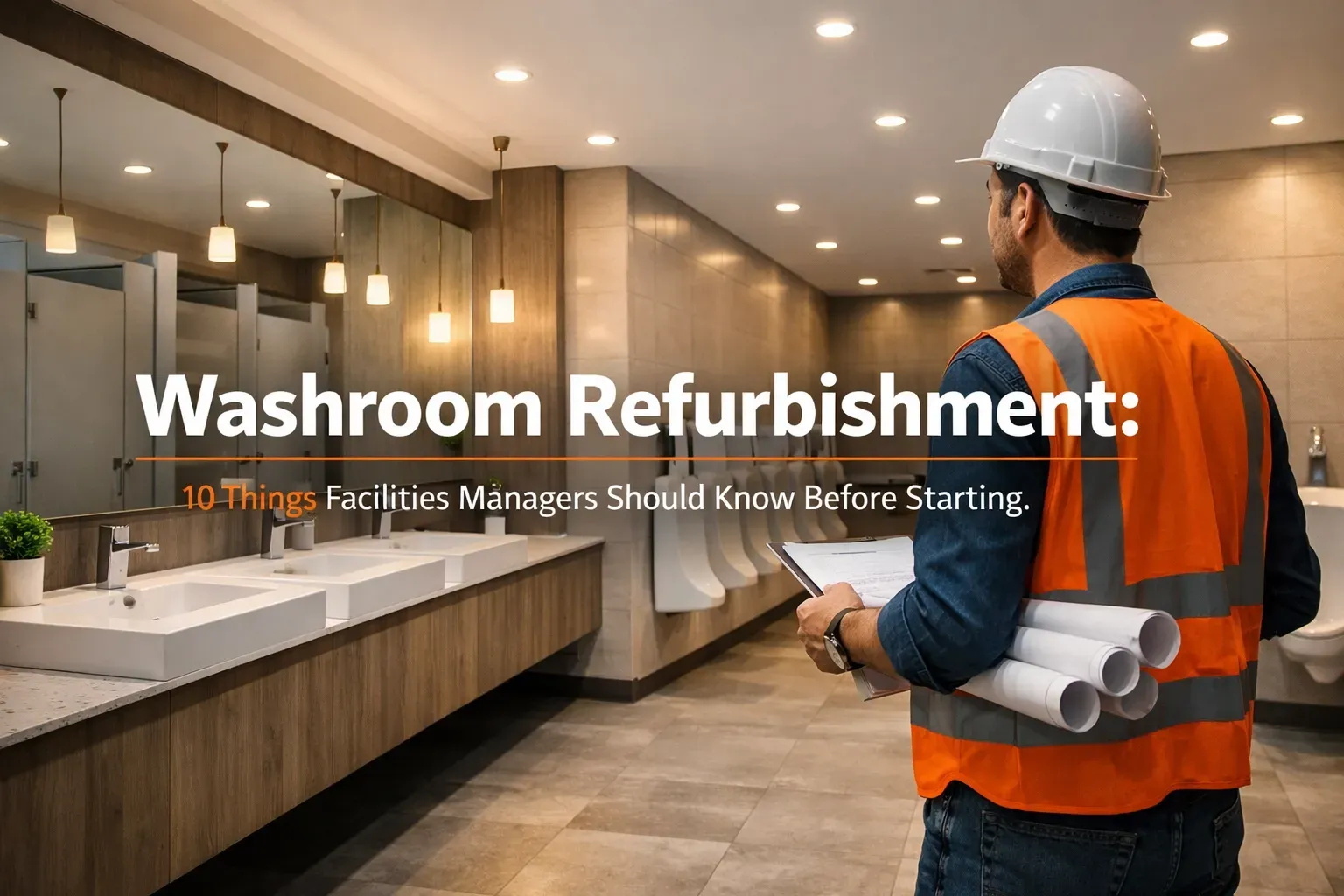
Washroom Refurbishment:
Washroom refurbishment is one of those projects that can seem straightforward on paper: until it isn't.
As a facilities manager, you're balancing user experience, compliance, budget constraints, and operational continuity. Get it wrong, and you're dealing with complaints, delays, and unexpected costs. Get it right, and your washrooms become low-maintenance assets that quietly serve your building for years.
Over the past 20 years, we've delivered hundreds of
commercial refurbishment projects across Birmingham, Manchester, Telford, and throughout the UK. Washrooms are a specialty area for us: one where details matter and experience counts.
Here are 10 things you should know before starting your next
washroom refurbishment project.
1. Conduct a Full Technical Assessment First
Don't assume your existing plumbing and drainage can support new fixtures.
Before you select fittings or finalize layouts, get a qualified plumber to assess your current infrastructure. Older buildings often have hidden issues: corroded pipework, inadequate water pressure, or drainage slopes that no longer meet current standards.
We've walked into sites where the planned refurbishment had to be redesigned entirely because the existing services couldn't support the specification. A technical survey upfront saves costly surprises later.
Check your electrical capacity too, especially if you're adding hand dryers or electric showers. These assessments take days, not weeks, but they'll protect your timeline.
2. Plan Around Building Occupancy
Your washrooms need to stay operational: or at least some of them do.
The best
washroom refurbishment projects phase the work to minimize disruption. If you're refurbishing multiple washrooms, stagger the schedule so users always have access to facilities. If it's a single washroom building, consider temporary solutions or plan the work outside peak occupancy periods.
We always discuss phasing with clients during the planning stage. Our in-house trades team can work efficiently to reduce downtime, but even the fastest projects need a realistic schedule that respects your building's daily operations.
Think about access routes too. Construction traffic through your main reception during business hours creates a poor impression. Plan material deliveries and waste removal for quieter times.
3. Budget for More Than Fixtures and Fittings
Washroom refurbishment isn't just toilets and taps.
Your budget needs to cover wall and floor finishes, suspended ceilings, lighting, ventilation, decoration, and often mechanical and electrical upgrades. Then there's project management, waste removal, and potential structural works if you're reconfiguring layouts.
A common mistake is budgeting based on fixture costs alone, then facing reality when the full scope becomes clear. We provide detailed, itemized quotations that break down every element: no hidden surprises.
Don't forget professional fees either. If your project requires building control approval or specialist design input, factor those costs in from the start.
4. Invest in Touchless Technology Where It Matters
Touchless fixtures aren't just about hygiene: they reduce maintenance and improve user experience.
Touchless taps, soap dispensers, and hand dryers eliminate wear-and-tear on mechanical components. They're particularly valuable in high-traffic environments where traditional fixtures need constant adjustment and repair.
Modern touchless systems are more reliable than older generations. Battery life has improved, sensors are more responsive, and replacement parts are readily available. The initial cost premium pays back through reduced maintenance calls and longer fixture life.
That said, don't go touchless everywhere just because you can. Toilet flush controls, for example, can be touchless or manual depending on user preference and budget. We'll talk you through what makes sense for your specific building.
5. Compliance Isn't Optional: Plan for It
Building regulations, accessibility standards, and health and safety requirements all apply to washroom refurbishment.
Your project needs to comply with Approved Document M (accessibility), Part G (sanitation and hot water safety), and Part F (ventilation). If you're in a commercial building, workplace regulations apply too: adequate facilities for the number of occupants, separate provision where required, and appropriate facilities for disabled users.
We handle compliance as standard on every project. Our 99% snag-free project rate comes from getting these details right first time: not retrofitting solutions after building control raises issues.
Don't treat accessibility as a box-ticking exercise. Properly designed accessible washrooms serve all users better, not just those with mobility requirements.
6. Choose Materials for Durability, Not Just Aesthetics
Washrooms are high-traffic, high-moisture environments. Your material choices need to reflect that.
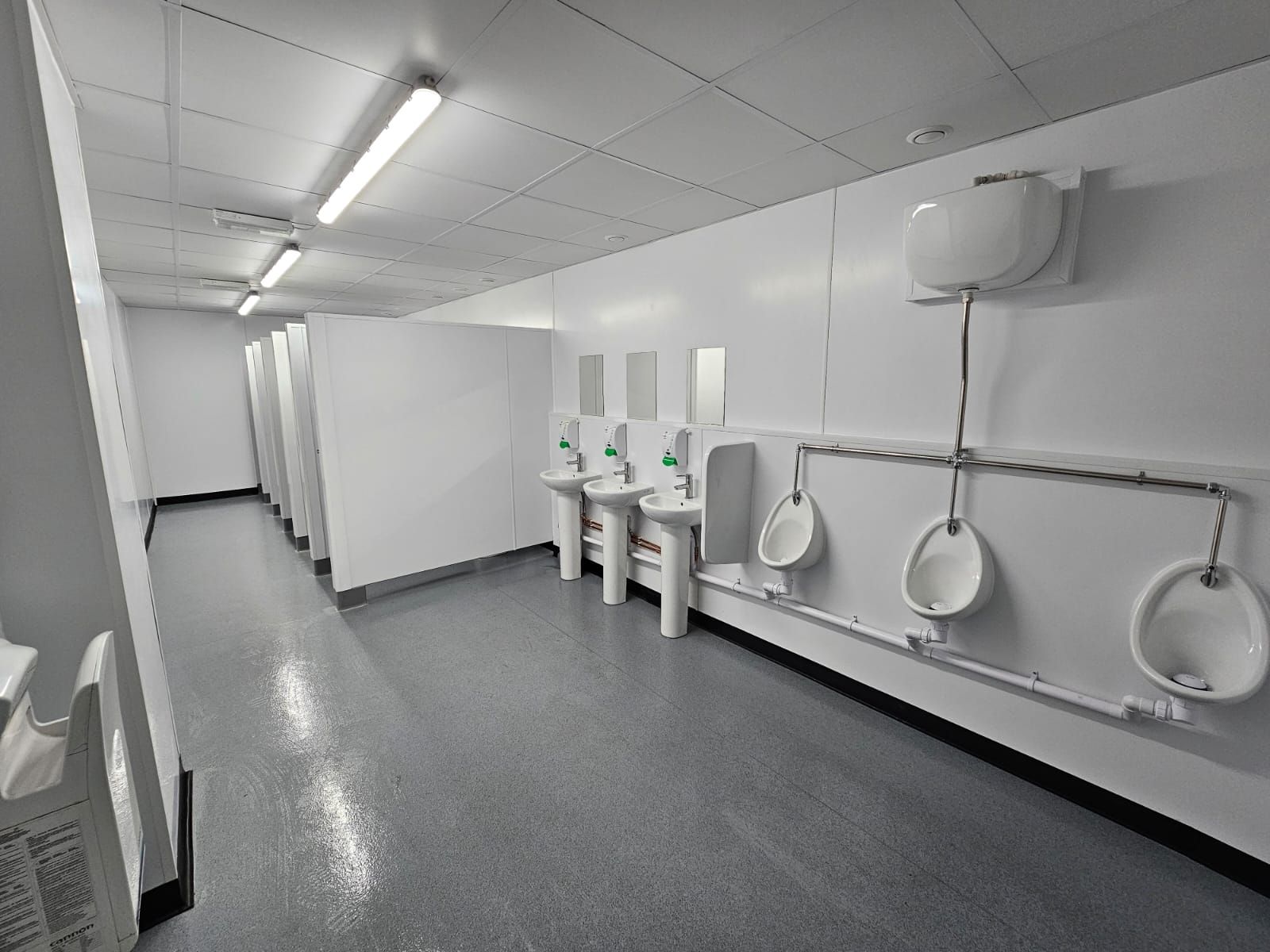
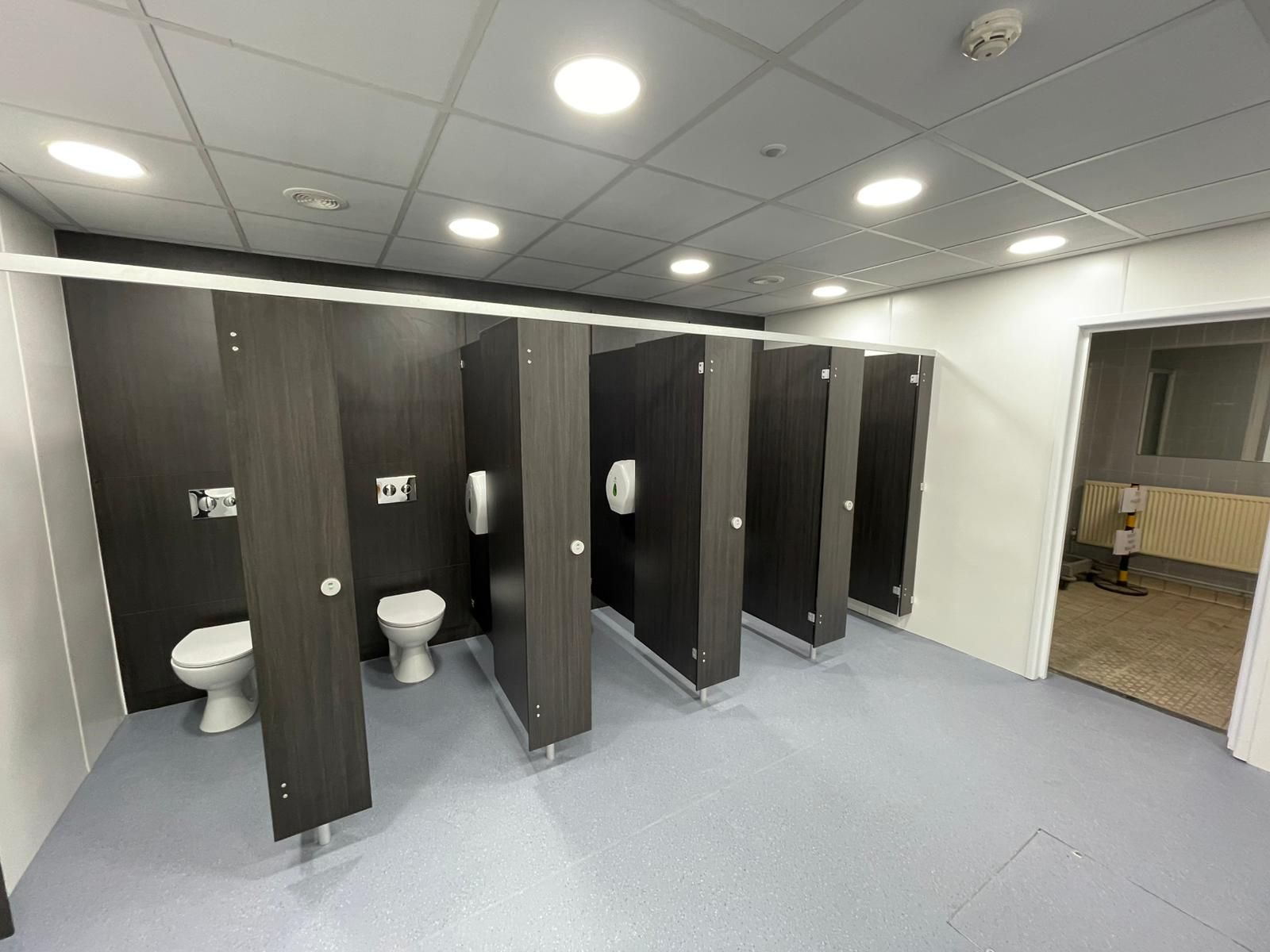
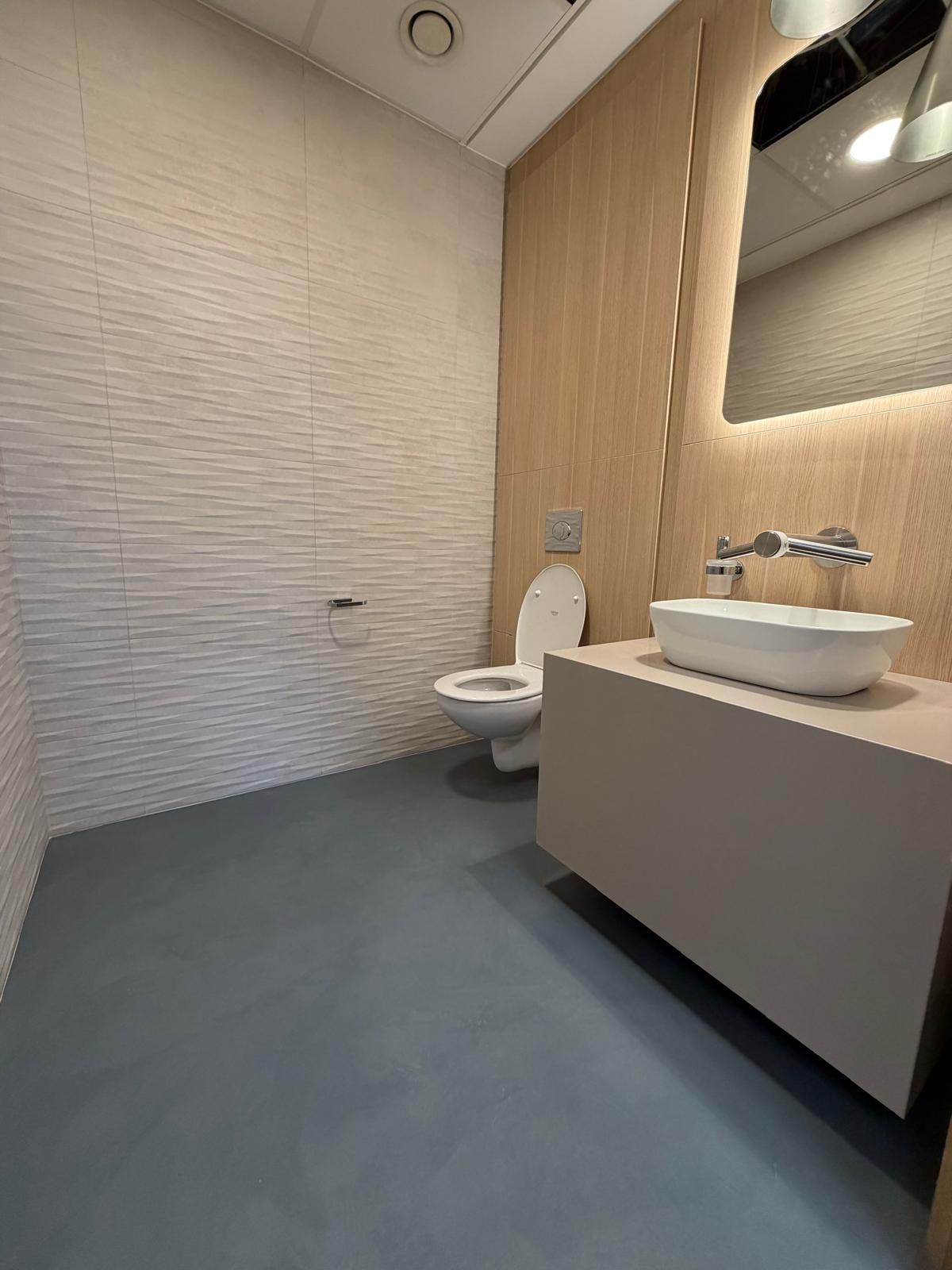
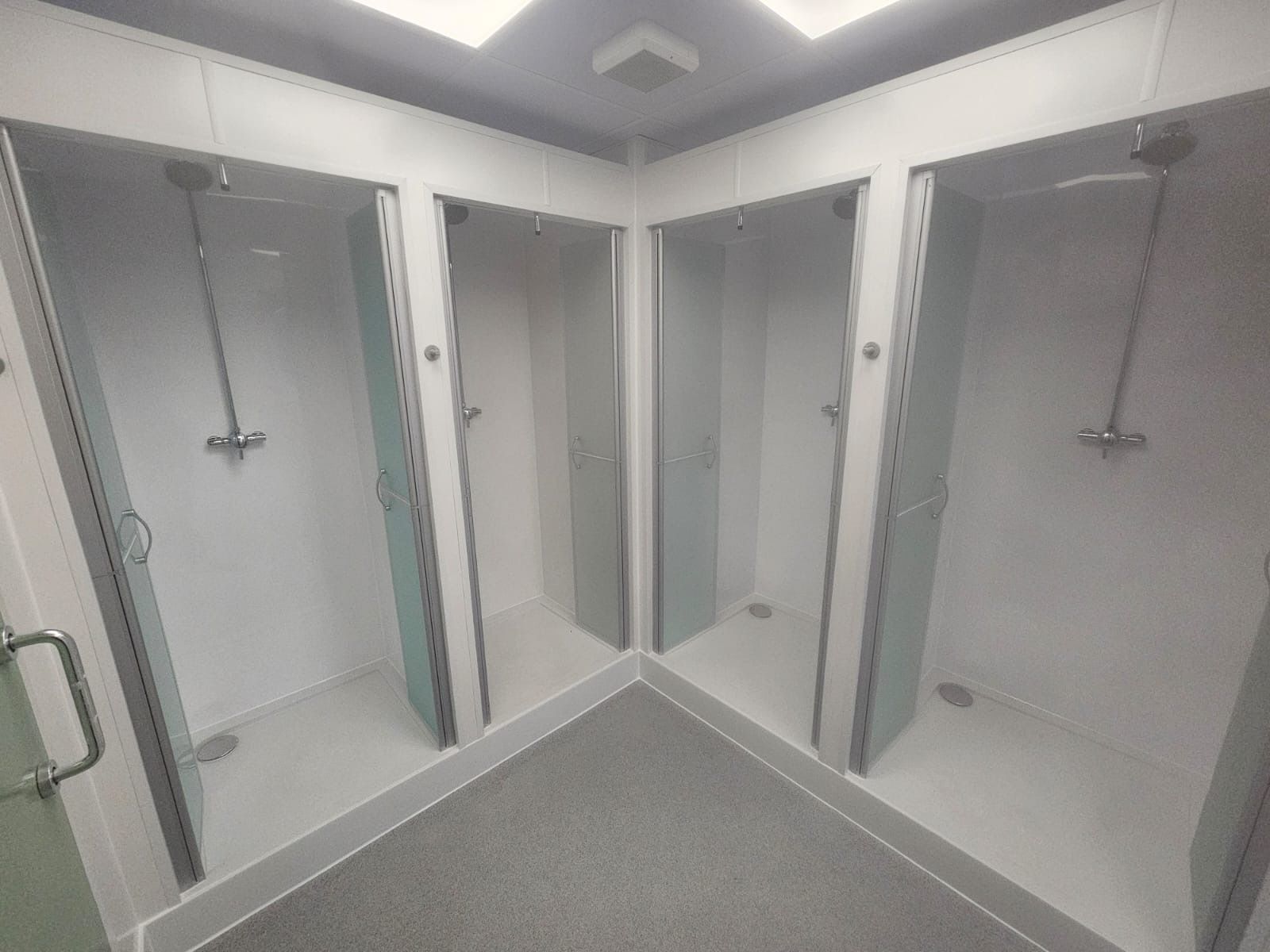
Porcelain tiles are more durable than ceramic. Slip-resistant floor finishes are essential, even if they're slightly more expensive. Wall panels in wet areas often outperform tiles for water-tightness and are faster to install.
Think about cleanability too. Grout lines harbor dirt and bacteria: large format tiles reduce grout lines, and wall panels eliminate them entirely. Matt finishes hide water marks better than high-gloss surfaces.
We specify commercial-grade materials that balance appearance with performance. These washrooms need to look good in five years, not just on handover day.
7. Ventilation Systems Need Proper Attention
Poor ventilation causes condensation, mold growth, odor problems, and material degradation.
If your existing ventilation is inadequate, your refurbishment is the time to upgrade it. Modern extract fans are quieter, more energy-efficient, and more effective than older systems. They're also required to meet current building regulations.
Extract rates need to be calculated based on room volume and usage. Timers or humidity sensors ensure fans run long enough to clear moisture after use. Ductwork needs to be properly sealed and terminated: botched installations are a common cause of ventilation failures.
This is detailed work that requires experienced contractors. Our in-house team includes qualified electricians and ventilation specialists who get it right.
8. Water Efficiency Reduces Operating Costs
Dual-flush toilets and flow-regulated taps significantly reduce water consumption.
In a typical office building, washrooms account for a substantial portion of total water use. Upgrading to water-efficient fixtures can cut consumption by 30% or more, reducing both water and heating costs.
This isn't just about environmental responsibility: it's about operational efficiency. Water costs are rising, and efficient fixtures pay for themselves over the building's lifecycle.
Look for fittings with WRAS approval (Water Regulations Advisory Scheme). This ensures they meet UK water efficiency and safety standards.
9. Use a Contractor with In-House Trades
Interior fit out projects involving multiple trades need coordination. Subcontracting everything increases complexity and risk.
We employ our own plumbers, electricians, tilers, joiners, and decorators. This gives us direct quality control and faster problem resolution. When all trades report to one project manager, communication is clearer and accountability is higher.
Our 99% snag-free rate reflects this approach. We don't hand over projects with incomplete punch lists or deferred defects. Every washroom is tested, commissioned, and fully functional before we sign off.
For facilities managers, this matters. You're not mediating between multiple contractors or chasing warranties from different suppliers. You have one point of contact and one company responsible for delivery.
10. Plan for Future Maintenance Access
Think about how your washrooms will be maintained after completion.
Ceiling access panels need to be positioned to reach concealed pipework and services. Behind-mirror access panels allow future maintenance without removing entire mirror installations. Isolator valves for each fixture make repairs faster and less disruptive.
Choose fixtures with readily available spare parts. Bespoke or designer fittings might look impressive, but if replacement parts take weeks to source, you'll regret the choice when something fails.
We design maintenance access into every project. It's not glamorous, but it saves you significant time and cost over the building's life.
Why Washroom Refurbishment Matters
Washrooms aren't just functional spaces: they shape how occupants and visitors perceive your building.
Well-designed, properly maintained washrooms contribute to workplace satisfaction, building value, and brand image. Poorly executed refurbishments create ongoing maintenance burdens and user complaints.
As specialists in
commercial refurbishment and
interior fit out, we've seen the difference that planning and execution quality makes. Our projects across Birmingham, Manchester, Telford, and throughout the UK are delivered with the same attention to detail, whether it's a single washroom or a multi-site rollout.
If you're planning a washroom refurbishment project, we'd welcome the opportunity to discuss your requirements. Our team brings over 20 years of experience, in-house trades capabilities, and a track record of delivering projects on time and to specification.
You can explore our previous
washroom refurbishment projects or
get in touch to discuss your specific needs.
#WashroomRefurbishment #CommercialRefurbishment #FacilitiesManagement #InteriorFitOut